prototyping & plastic eingineering
Development of an Innovative Bird Seed Packaging and Feeder System
Overview
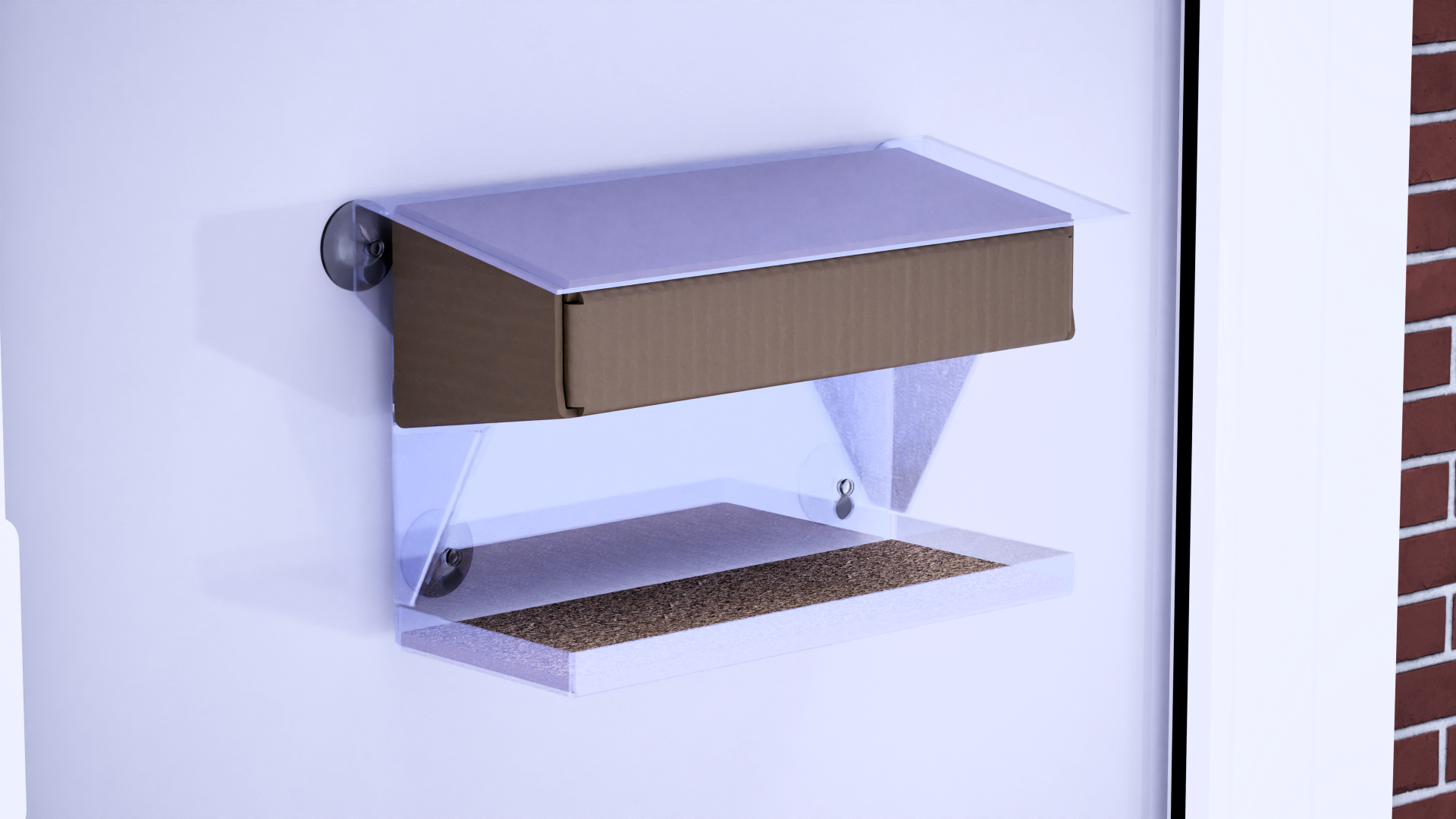
Our client, a bird seed supplier, wanted to diversify their portfolio by introducing a subscription-based service to their clients. We supported them by designing a novel bird seed packaging and feeder system that would solve previous problems such as seeds spilling while filling up the feeders. The aim was to create packaging that could be shipped economically while remaining easy to use. The feeder itself needed to provide shelter to prevent seed rot and should be mounted to a window so customers could observe the birds. The project combined packaging studies, design exploration, and manufacturing analysis to balance usability, durability, and cost-effectiveness.
Methodology
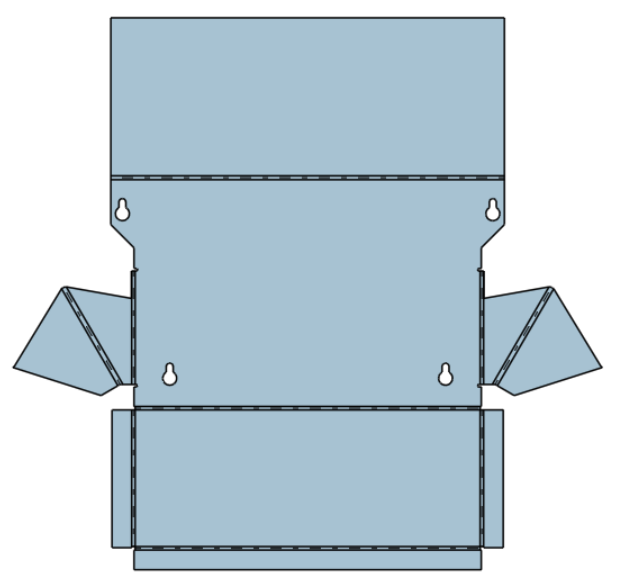
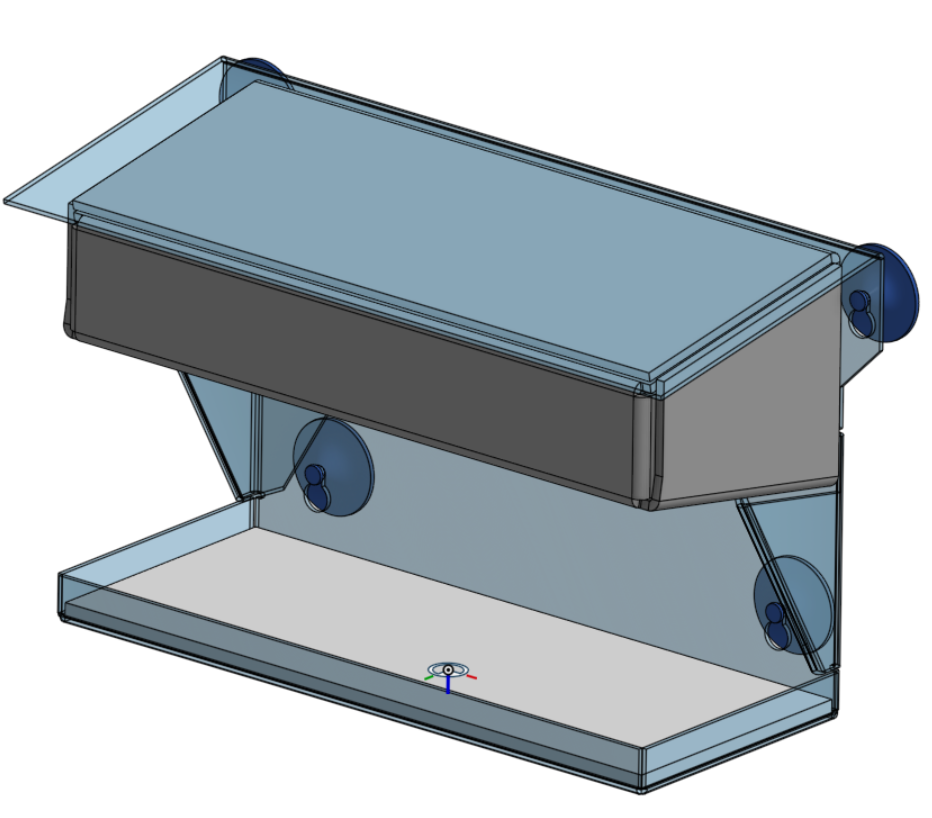
We began with a detailed analysis of packaging options to determine what could be shipped cost-effectively, resist damage in transit, and maximise volume efficiency. From there, we used a reverse design approach for the feeder: We evaluated different manufacturing methods to find out what was already effective on the market. Using these insights, we chose laser-cut acrylic sheet with heat-bent folds, enabling low-volume production for testing. We prototyped features like a sheltering hood to protect seeds from rot and ran concept trials to test different mounting options and overall usability.
Results Discussion
Testing showed that a window-mounted feeder, although originally desired by the client, was not a viable option. It would block too much light when attached to windows. We also had concerns about larger birds pecking into the cardboard packaging and causing seed spillage. By uncovering these limitations early, the project avoided costly development further down the line. The process highlighted the importance of early discovery stages in identifying practical and commercial challenges. Although the concept did not move forward, it delivered valuable insight into packaging, feeder design, and manufacturability for future product opportunities.
Our client, a bird seed supplier, wanted to diversify their portfolio by introducing a subscription-based service to their clients. We supported them by designing a novel bird seed packaging and feeder system that would solve previous problems such as seeds spilling while filling up the feeders. The aim was to create packaging that could be shipped economically while remaining easy to use. The feeder itself needed to provide shelter to prevent seed rot and should be mounted to a window so customers could observe the birds. The project combined packaging studies, design exploration, and manufacturing analysis to balance usability, durability, and cost-effectiveness.
Methodology
We began with a detailed analysis of packaging options to determine what could be shipped cost-effectively, resist damage in transit, and maximise volume efficiency. From there, we used a reverse design approach for the feeder: We evaluated different manufacturing methods to find out what was already effective on the market. Using these insights, we chose laser-cut acrylic sheet with heat-bent folds, enabling low-volume production for testing. We prototyped features like a sheltering hood to protect seeds from rot and ran concept trials to test different mounting options and overall usability.
Results Discussion
Testing showed that a window-mounted feeder, although originally desired by the client, was not a viable option. It would block too much light when attached to windows. We also had concerns about larger birds pecking into the cardboard packaging and causing seed spillage. By uncovering these limitations early, the project avoided costly development further down the line. The process highlighted the importance of early discovery stages in identifying practical and commercial challenges. Although the concept did not move forward, it delivered valuable insight into packaging, feeder design, and manufacturability for future product opportunities.
Packaging design and optimisation
Product design and development
Manufacturing process analysis
Market research and design benchmarking
Prototyping and material testing
Feasibility assessment and concept validation
Product design and development
Manufacturing process analysis
Market research and design benchmarking
Prototyping and material testing
Feasibility assessment and concept validation
"This project proved the value of early-stage discovery in identifying practical limitations before significant investment, while also providing valuable insight for future product design and development."