Electronics, Sheet Metal
Fabric Texture Scanner Development
Overview
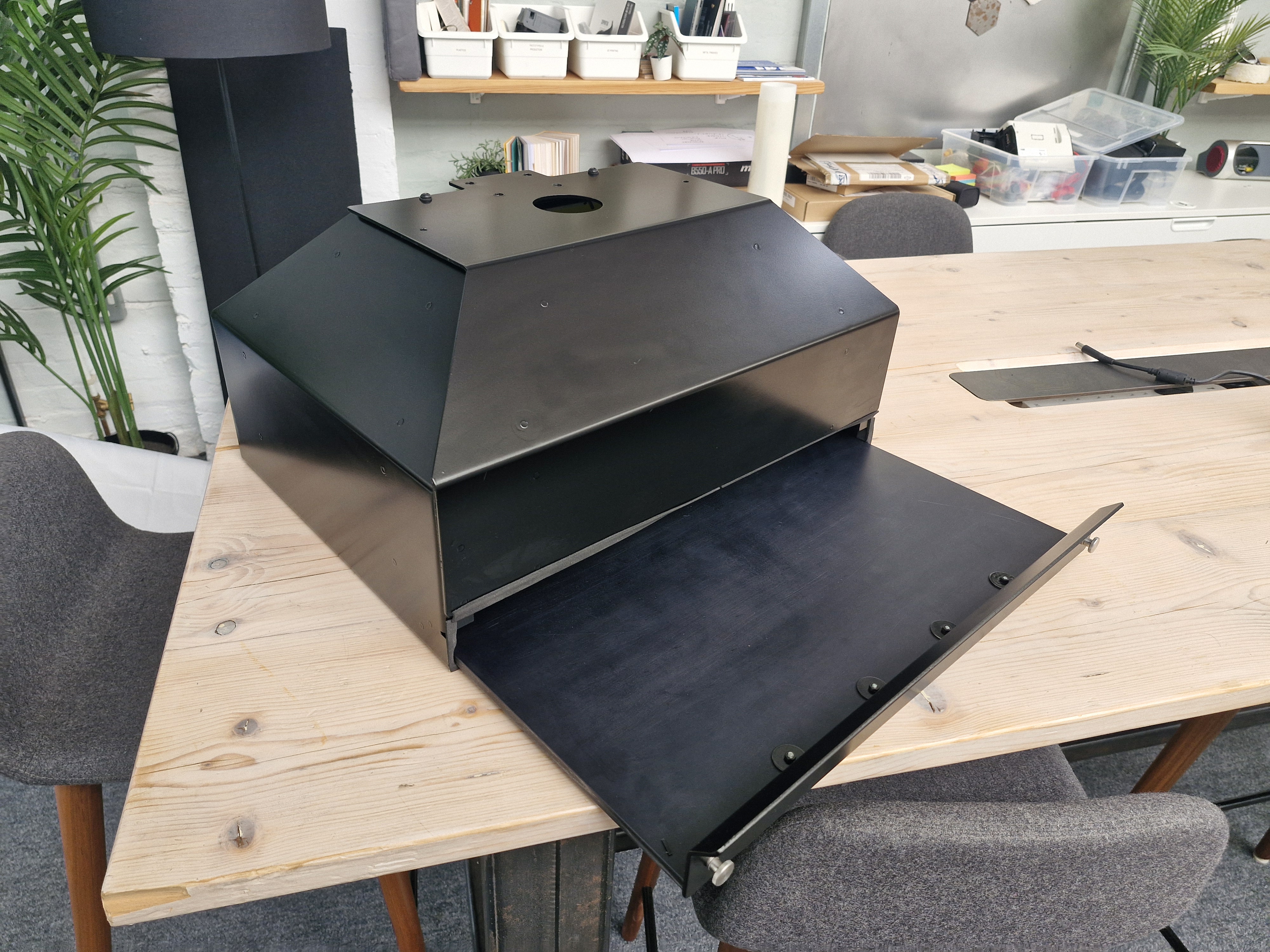
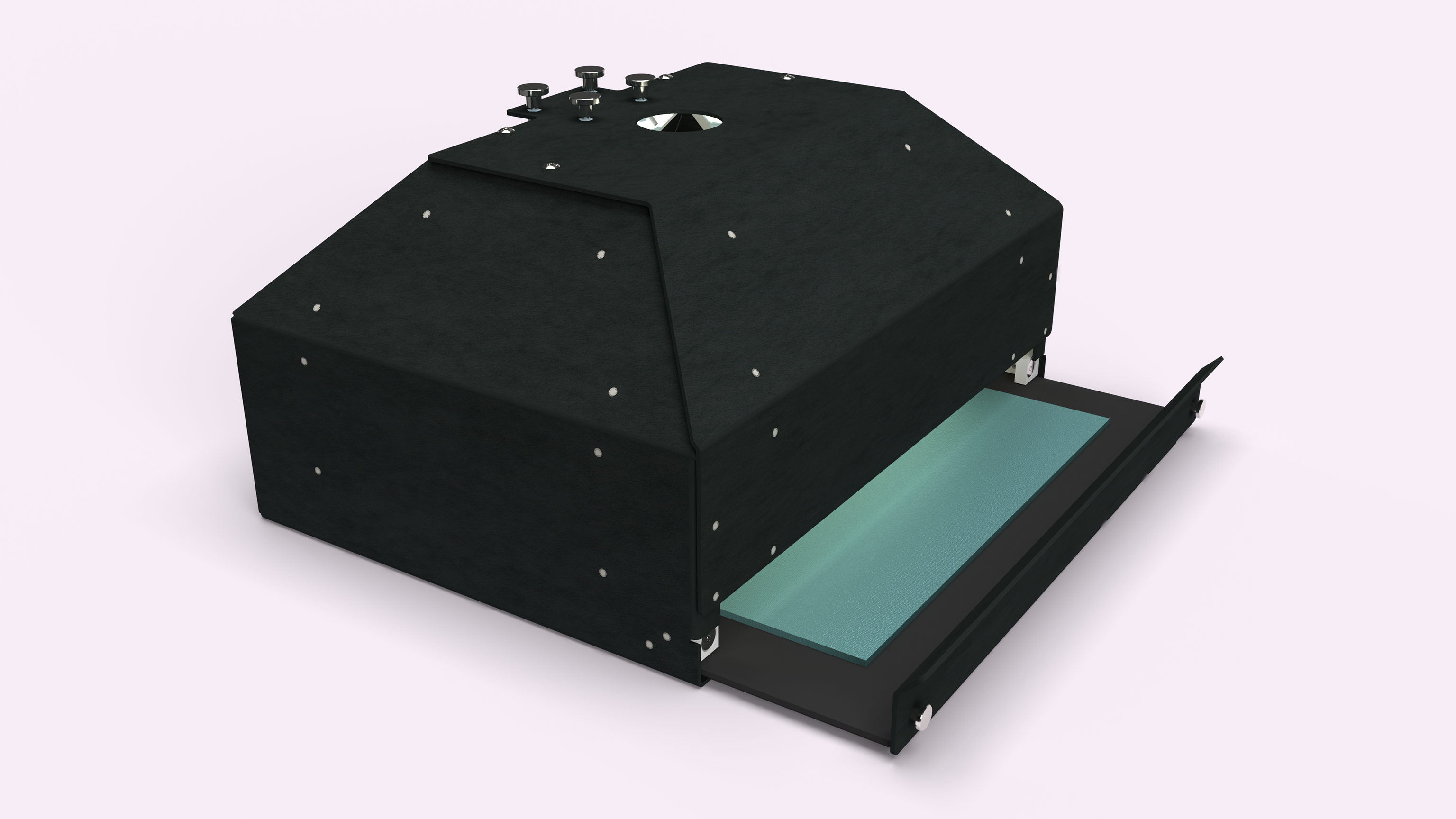
This project focused on developing a custom fabric texture scanner capable of capturing A3-sized samples for creating realistic digital fabric models. The client wanted a larger and more affordable alternative to existing scanners, which were expensive and limited in sample size. Our final design used angled LED lights and a camera system to capture fine fabric details. With this approach, we managed to convert real textures into detailed digital models while still keeping production costs low.
Methodology
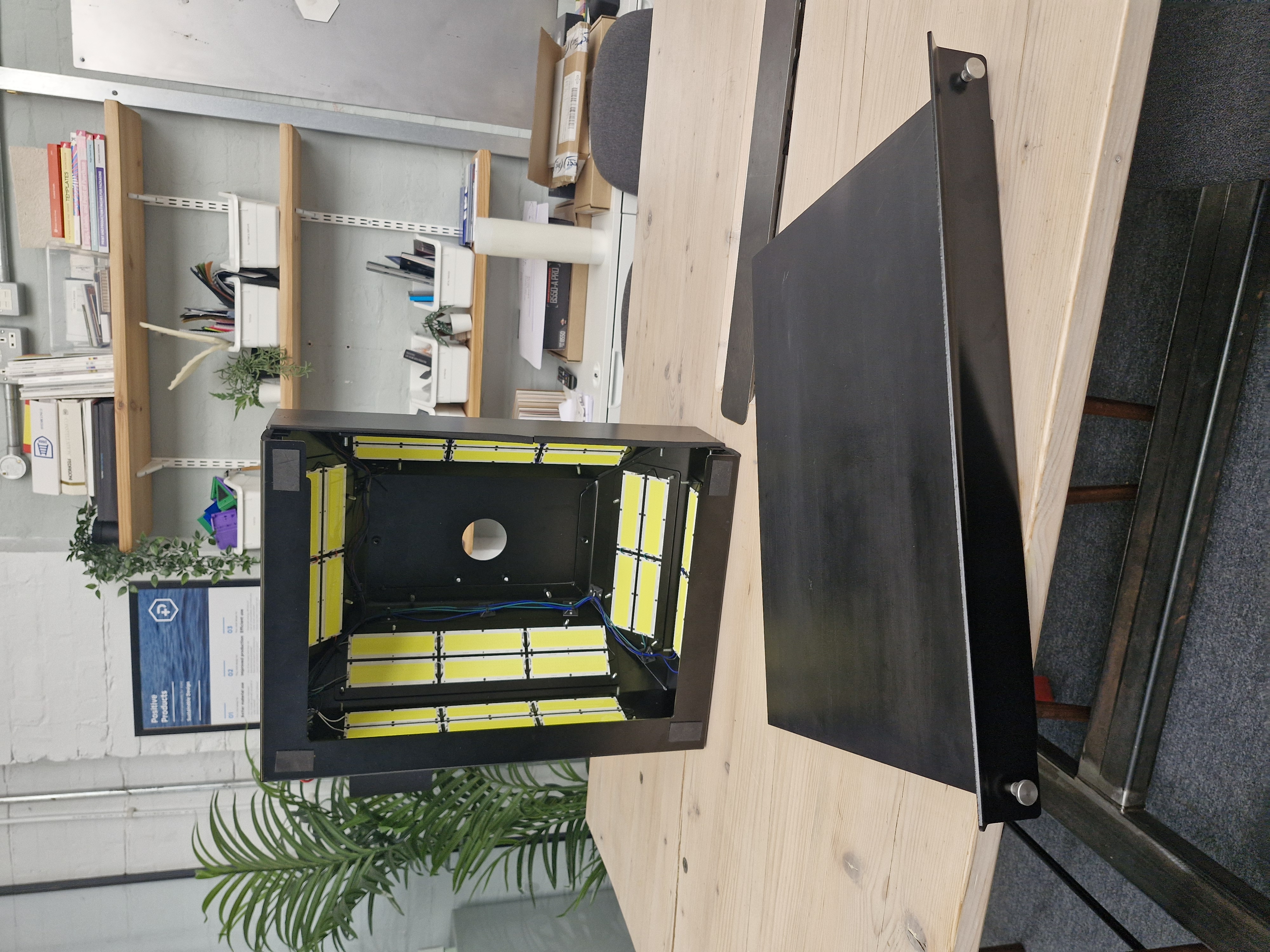
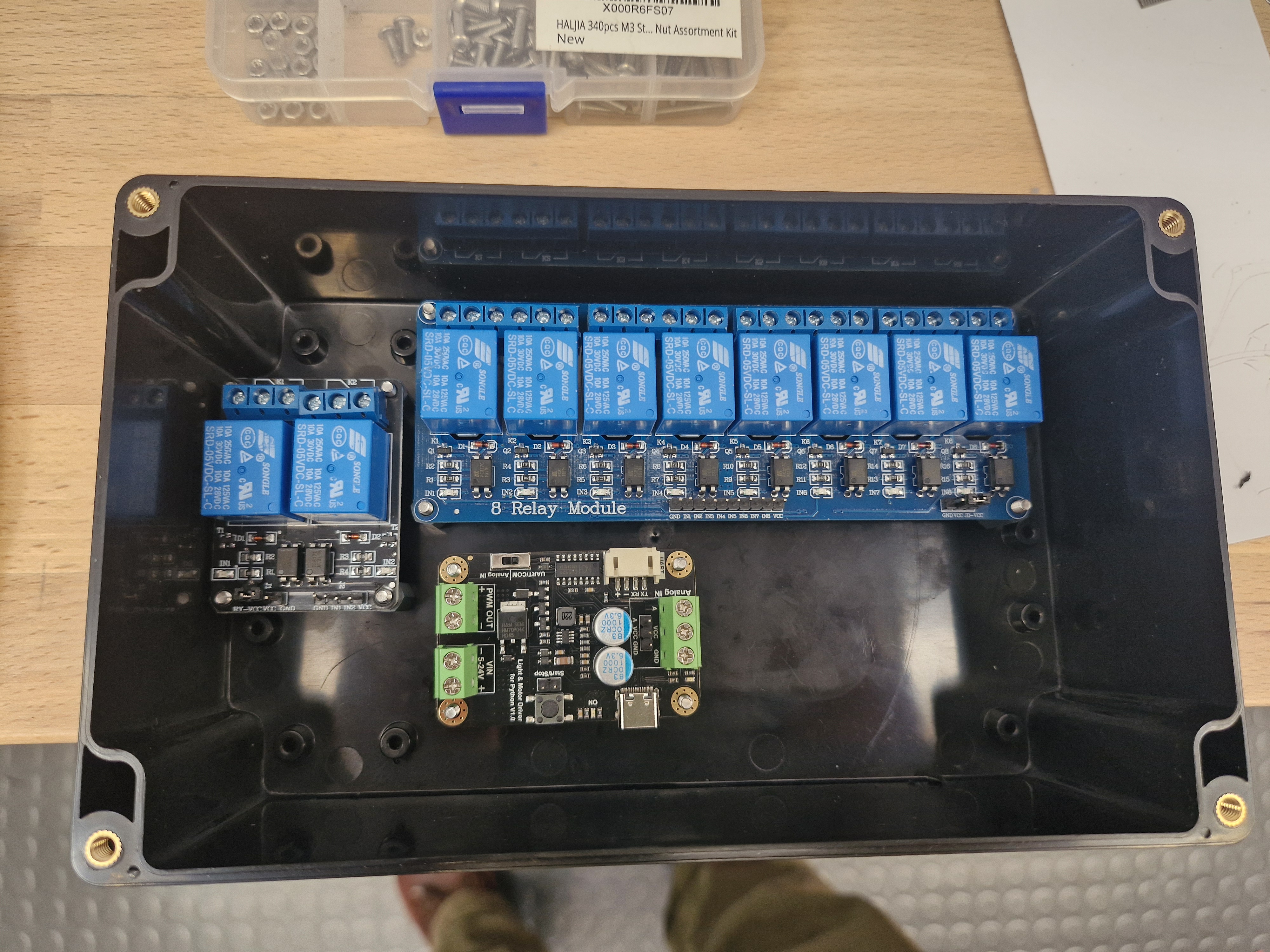
The process began by setting clear technical goals and testing different lighting setups to find the best way to capture fabric textures accurately. We built a custom control system using COB LED panels powered by a Raspberry Pi, housed in a durable sheet metal casing. To move the fabric smoothly and prevent unwanted reflections, we used a self-lubricating black nylon tray. Ongoing testing and close collaboration with the client allowed us to refine the design until it satisfied all performance, visual, and budget requirements.
Results Discussion
The completed scanner delivered high-quality results, capturing A3 fabric samples with consistent accuracy and minimal distortion. Its cost was less than one-quarter of the cheapest commercial equivalent, offering both scalability and reliability. This project demonstrated how careful material selection, integrated electronics, focused design, and close collaboration with the client can dramatically reduce production costs while improving usability and performance in advanced imaging systems. The end result was an innovative solution that offered more affordable, high-quality fabric scanning.
This project focused on developing a custom fabric texture scanner capable of capturing A3-sized samples for creating realistic digital fabric models. The client wanted a larger and more affordable alternative to existing scanners, which were expensive and limited in sample size. Our final design used angled LED lights and a camera system to capture fine fabric details. With this approach, we managed to convert real textures into detailed digital models while still keeping production costs low.
Methodology
The process began by setting clear technical goals and testing different lighting setups to find the best way to capture fabric textures accurately. We built a custom control system using COB LED panels powered by a Raspberry Pi, housed in a durable sheet metal casing. To move the fabric smoothly and prevent unwanted reflections, we used a self-lubricating black nylon tray. Ongoing testing and close collaboration with the client allowed us to refine the design until it satisfied all performance, visual, and budget requirements.
Results Discussion
The completed scanner delivered high-quality results, capturing A3 fabric samples with consistent accuracy and minimal distortion. Its cost was less than one-quarter of the cheapest commercial equivalent, offering both scalability and reliability. This project demonstrated how careful material selection, integrated electronics, focused design, and close collaboration with the client can dramatically reduce production costs while improving usability and performance in advanced imaging systems. The end result was an innovative solution that offered more affordable, high-quality fabric scanning.
Electronic control system design and integration
COB LED lighting array with Raspberry Pi control
Component specification, sourcing, and procurement
Development of low-friction nylon sliding tray system
Sheet metal design and powder-coated structural enclosure
Optical optimisation to minimise reflections during scanning
COB LED lighting array with Raspberry Pi control
Component specification, sourcing, and procurement
Development of low-friction nylon sliding tray system
Sheet metal design and powder-coated structural enclosure
Optical optimisation to minimise reflections during scanning
"By rethinking the approach to texture scanning, we made high-quality digital capture more accessible than ever."