sheet metal
Stainless-Steel Filtration Bed for Wastewater Recovery
Overview
For this project, our client was looking for a practical way to manage wastewater from a bin-cleaning machine used to sanitise waste containers. These machines clean bins using high-pressure water and rotating spray heads to remove grime, bacteria, and odours, offering a more hygienic and efficient alternative to manual cleaning. After the wash cycle, the collected water needs to be filtered, stored, and drained. The challenge was to design a robust filtration that could separate debris from the collected water while remaining easy to clean and suitable for repeated use. The end result was a stainless-steel, sheet-metal construction combined with a layered filtration system that offered a durable and efficient solution.
Methodology
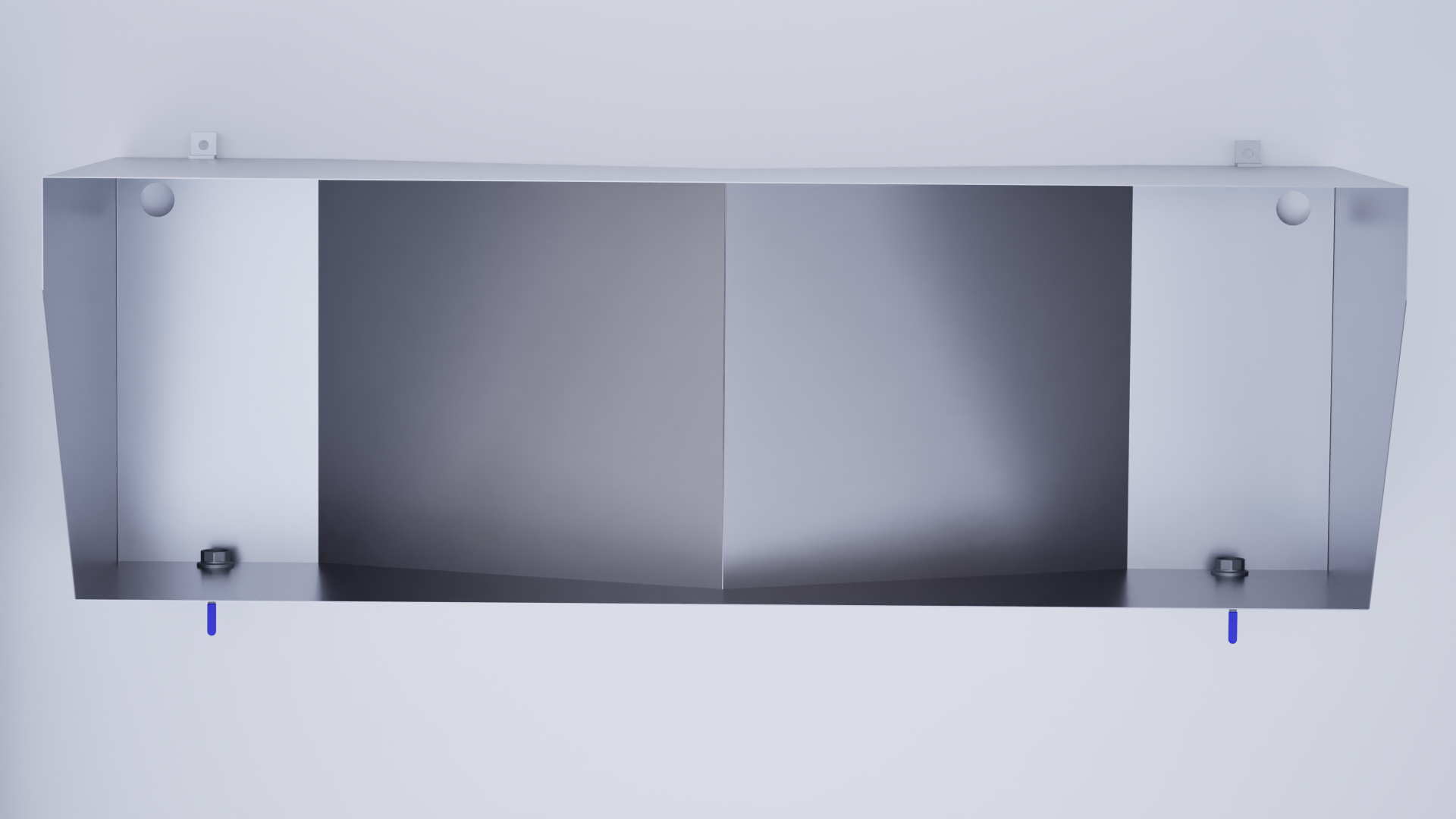
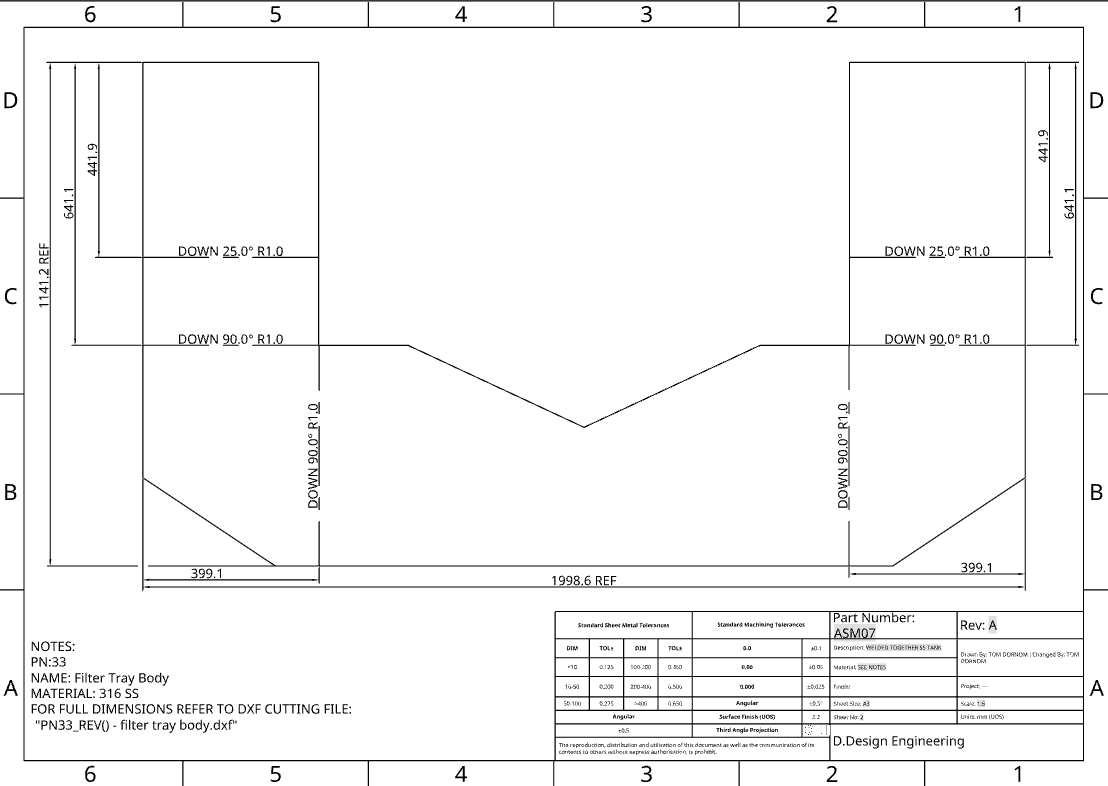
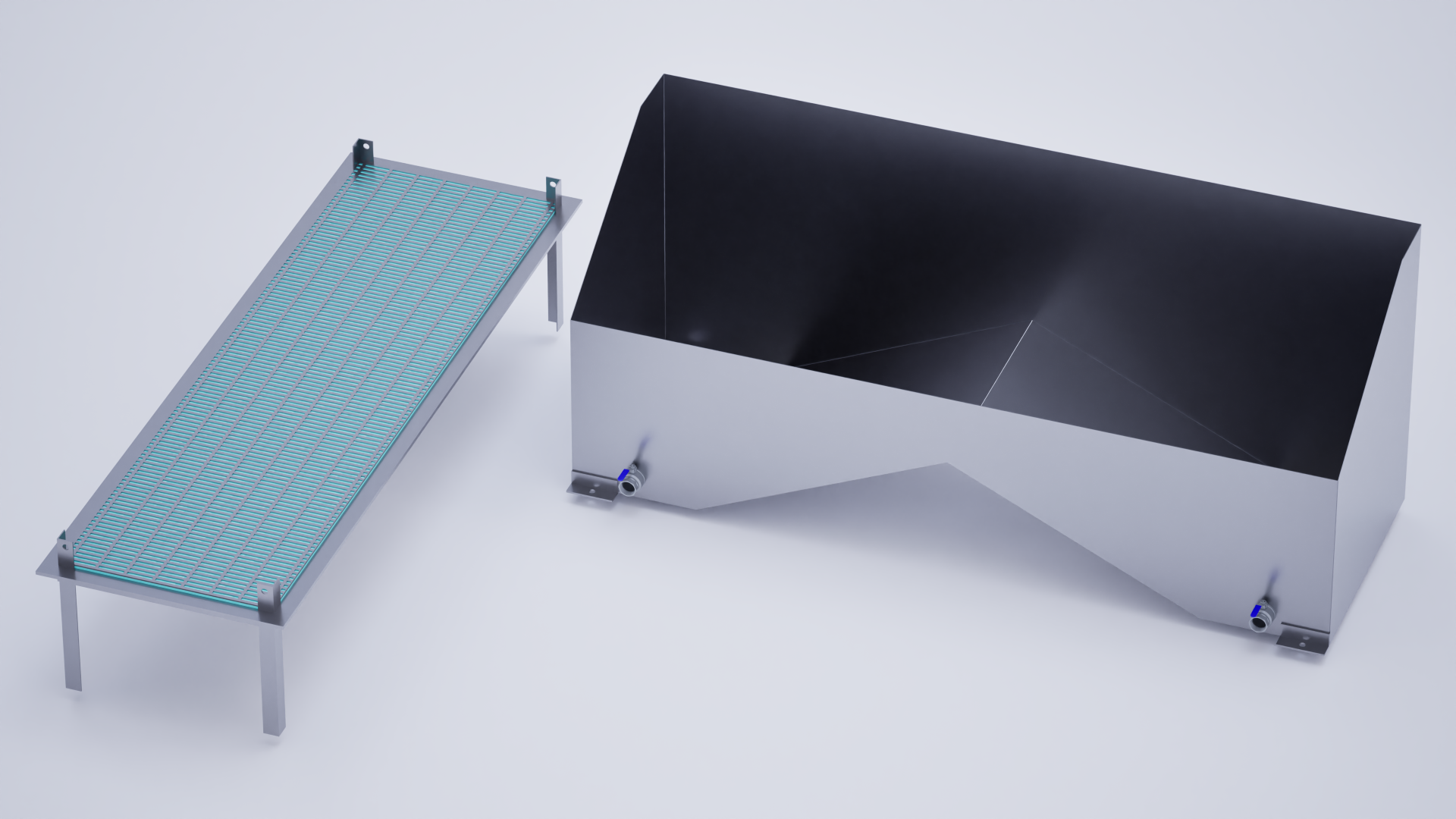
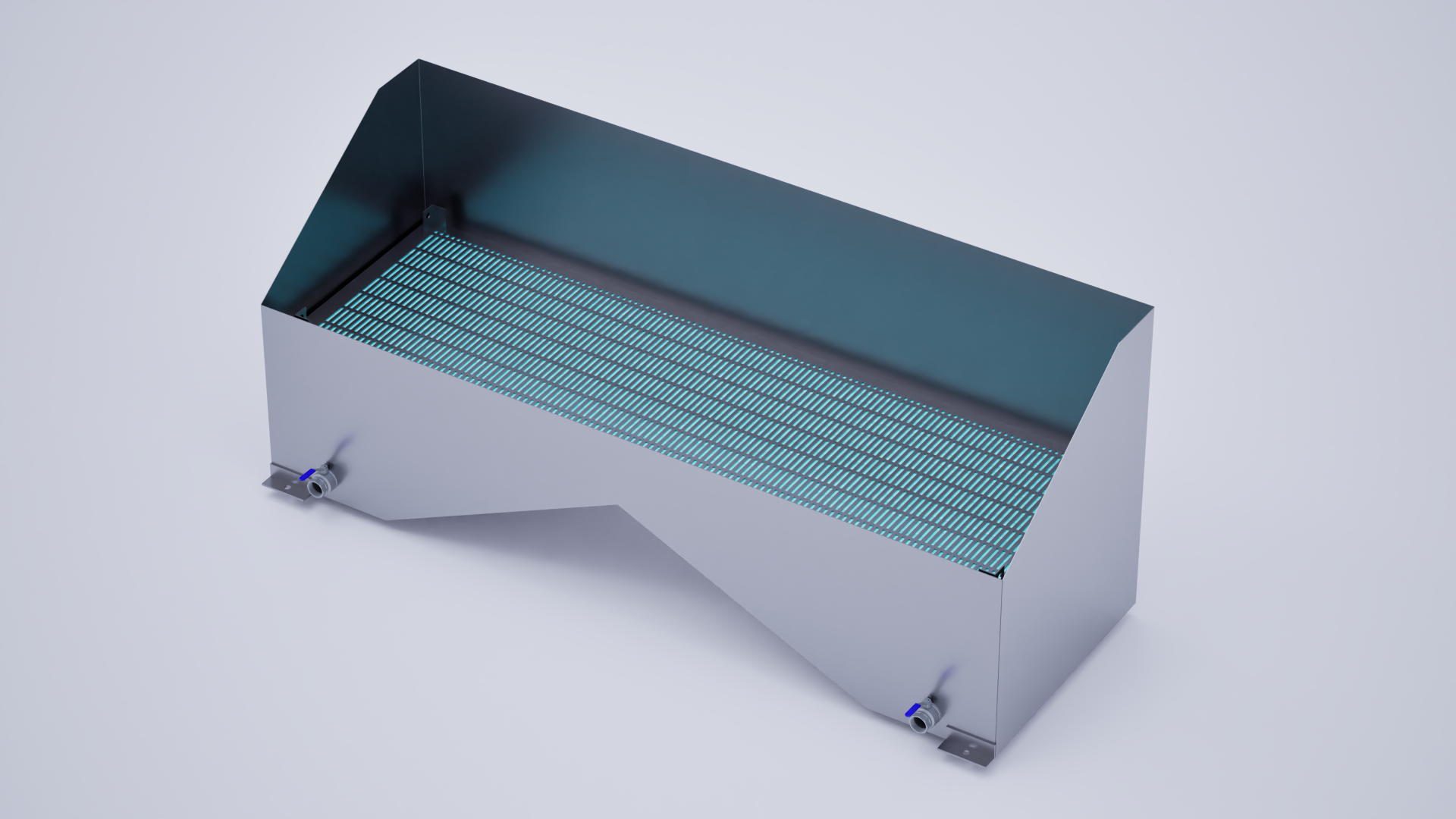
We designed the filtration bed from stainless steel using sheet-metal construction and welded the structure to keep it water-tight. Inside the unit, we stacked special gauze filtering sheets in multiple layers, with each layer targeting different particle sizes. This proportional layering allowed debris to be filtered gradually rather than in a single stage, helping the unit remain effective and easy to clean.
Results Discussion
The finished filtration bed successfully filtered water collected after the bin-cleaning process and stored the cleaned water ready for draining. The stainless-steel construction provided a robust, water-tight structure, while the layered gauze system filtered debris proportionally by size and made the unit easy to clean. Overall, this project proved that careful material choice and a practical design approach can deliver reliable wastewater management without over-engineering the system.
For this project, our client was looking for a practical way to manage wastewater from a bin-cleaning machine used to sanitise waste containers. These machines clean bins using high-pressure water and rotating spray heads to remove grime, bacteria, and odours, offering a more hygienic and efficient alternative to manual cleaning. After the wash cycle, the collected water needs to be filtered, stored, and drained. The challenge was to design a robust filtration that could separate debris from the collected water while remaining easy to clean and suitable for repeated use. The end result was a stainless-steel, sheet-metal construction combined with a layered filtration system that offered a durable and efficient solution.
Methodology
We designed the filtration bed from stainless steel using sheet-metal construction and welded the structure to keep it water-tight. Inside the unit, we stacked special gauze filtering sheets in multiple layers, with each layer targeting different particle sizes. This proportional layering allowed debris to be filtered gradually rather than in a single stage, helping the unit remain effective and easy to clean.
Results Discussion
The finished filtration bed successfully filtered water collected after the bin-cleaning process and stored the cleaned water ready for draining. The stainless-steel construction provided a robust, water-tight structure, while the layered gauze system filtered debris proportionally by size and made the unit easy to clean. Overall, this project proved that careful material choice and a practical design approach can deliver reliable wastewater management without over-engineering the system.
Stainless-steel sheet-metal design
Welded, water-tight fabrication design
Multi-layer gauze filtration development
Particle-size staged filtration strategy
Wastewater recovery system integration
Hygiene- and maintenance-focused design
Welded, water-tight fabrication design
Multi-layer gauze filtration development
Particle-size staged filtration strategy
Wastewater recovery system integration
Hygiene- and maintenance-focused design
“This project provided a simple, durable filtration solution for managing wastewater generated by bin-cleaning operations.”