Structures & marine engineering
Structural Aluminium Framing for Marine Application
Overview
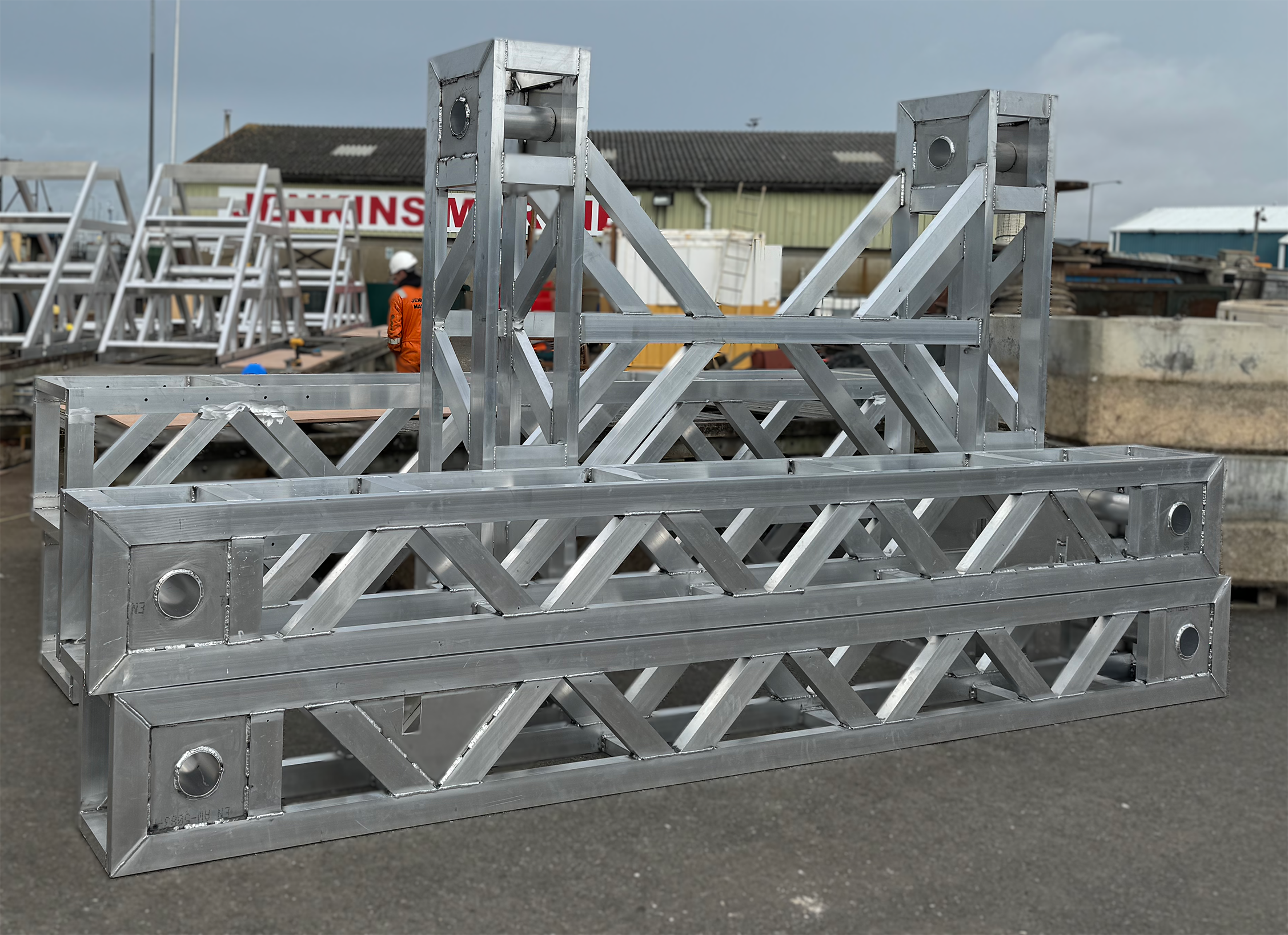
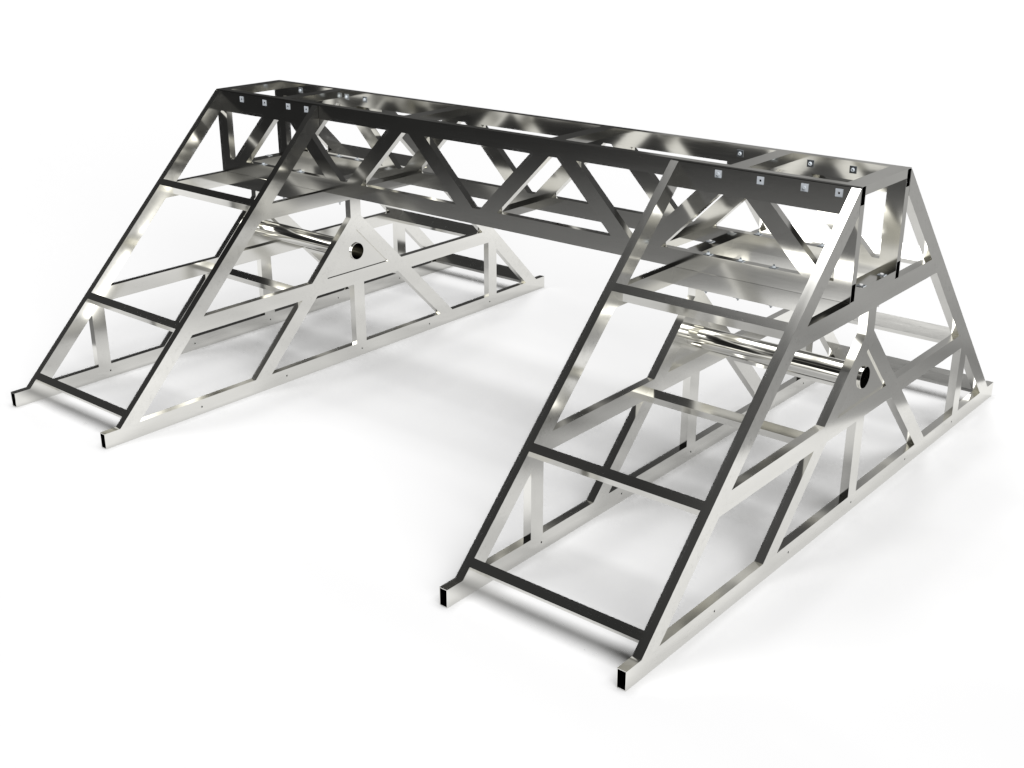
We developed a structural aluminium framing system designed to support a heavily loaded device lifted by a pontoon. We chose aluminium for its excellent strength-to-weight ratio and its resistance to corrosion, making it the ideal choice for marine environments. Because aluminium is an expensive material that requires skilled fabrication, we placed strong emphasis on cost-effective design and material efficiency. The goal was to deliver a lightweight, yet durable frame that could perform reliably under demanding load conditions.
Methodology
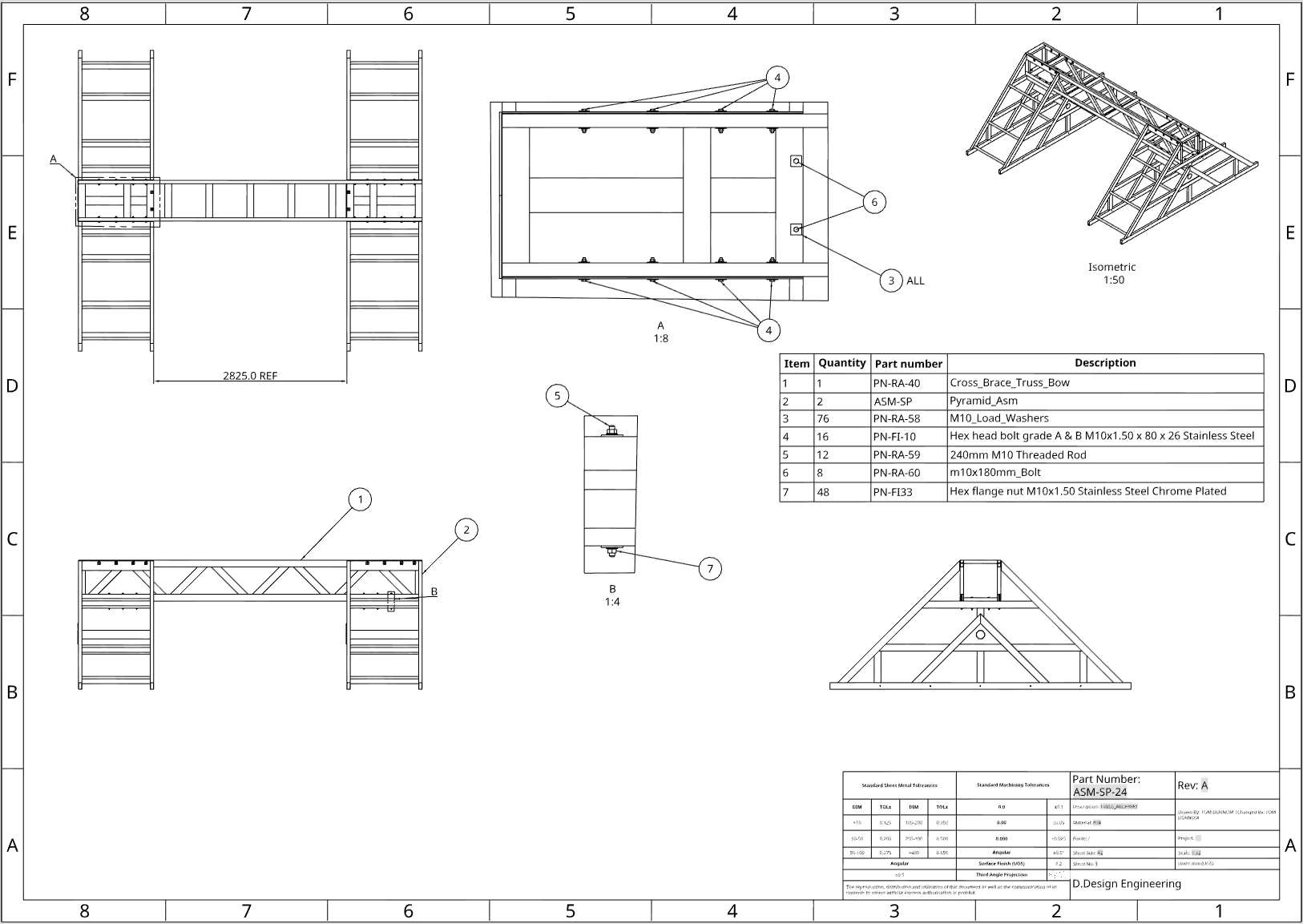
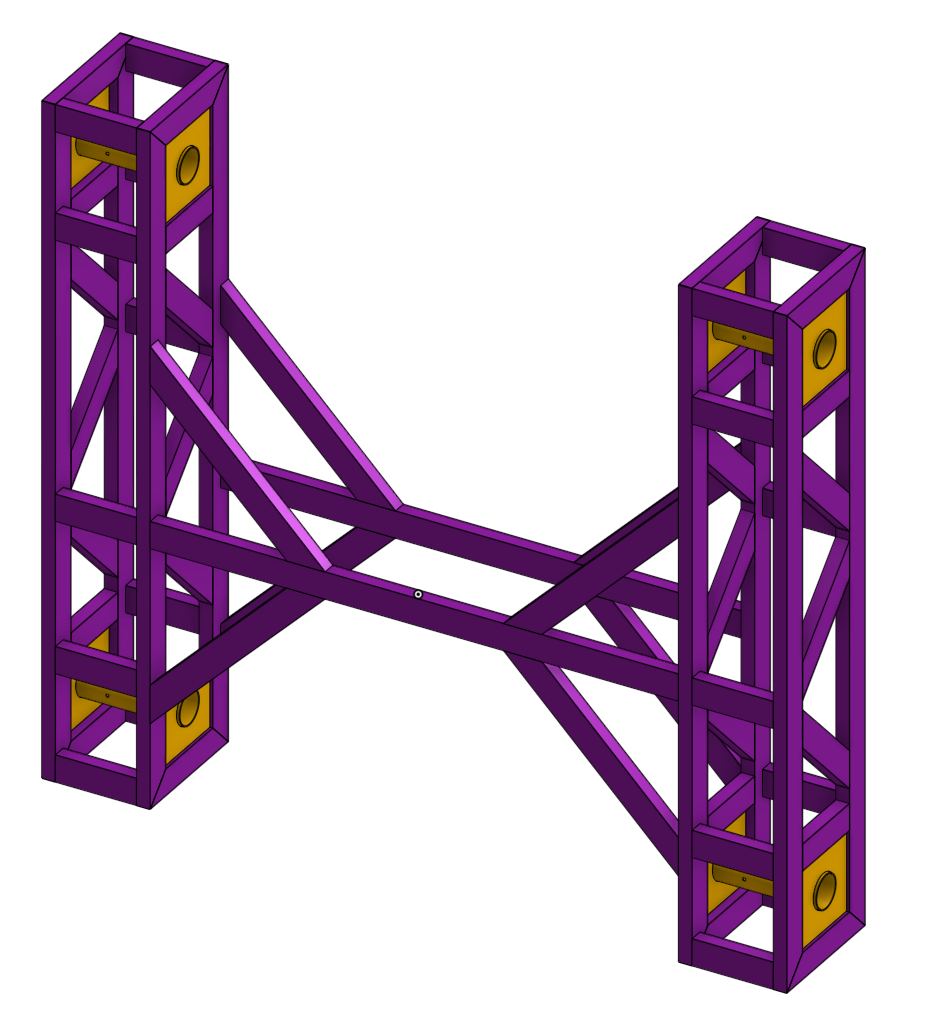
Our team combined hand calculations, Finite Element Analysis (FEA), and simulations using STAAD software to validate the frame’s performance under load. Our team produced detailed engineering drawings and implemented strict quality control measures to ensure precision throughout production. Close collaboration with our aluminium manufacturing partner ensured every component was produced accurately and assembled with the correct clearances. This approach reduced waste and guaranteed a seamless process from design to installation.
Results Discussion
The final structure used around 1000 kg of aluminium, which provided the necessary strength, stability, and durability for long-term marine operation. No quality or fit issues occurred during assembly, and every component met specification on the first build. The project demonstrated the value of precise design work, advanced simulation, and close collaboration with manufacturing partners. It stands as a strong example of efficient material use and engineering quality in marine structural design.
We developed a structural aluminium framing system designed to support a heavily loaded device lifted by a pontoon. We chose aluminium for its excellent strength-to-weight ratio and its resistance to corrosion, making it the ideal choice for marine environments. Because aluminium is an expensive material that requires skilled fabrication, we placed strong emphasis on cost-effective design and material efficiency. The goal was to deliver a lightweight, yet durable frame that could perform reliably under demanding load conditions.
Methodology
Our team combined hand calculations, Finite Element Analysis (FEA), and simulations using STAAD software to validate the frame’s performance under load. Our team produced detailed engineering drawings and implemented strict quality control measures to ensure precision throughout production. Close collaboration with our aluminium manufacturing partner ensured every component was produced accurately and assembled with the correct clearances. This approach reduced waste and guaranteed a seamless process from design to installation.
Results Discussion
The final structure used around 1000 kg of aluminium, which provided the necessary strength, stability, and durability for long-term marine operation. No quality or fit issues occurred during assembly, and every component met specification on the first build. The project demonstrated the value of precise design work, advanced simulation, and close collaboration with manufacturing partners. It stands as a strong example of efficient material use and engineering quality in marine structural design.
Design and analysis of structural aluminium frames
Structural Hand calculations
Finite Element Analysis (FEA)
Utilisation of STAAD software for load simulations
Engineering drawings
Quality control oversight
Collaboration with manufacturing partners
Structural Hand calculations
Finite Element Analysis (FEA)
Utilisation of STAAD software for load simulations
Engineering drawings
Quality control oversight
Collaboration with manufacturing partners
"Through detailed analysis and simulation, we engineered a lightweight aluminium frame built to perform under demanding marine loads."