Structures & hydraulics
Wheelie Bin Lifting and Cleaning System
Overview
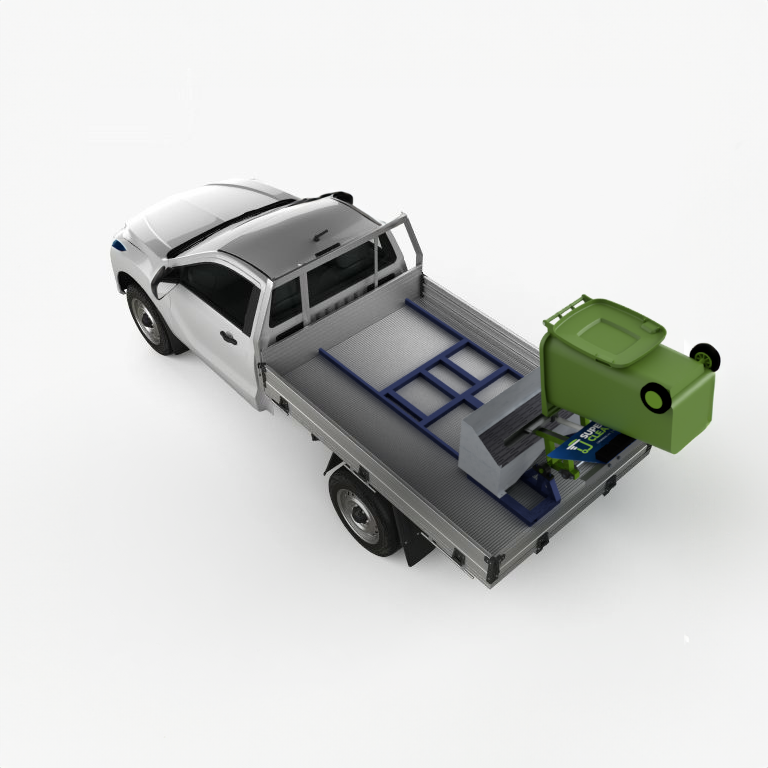
Our team partnered with a client who had over 15 years of experience using a wheelie bin lifting and cleaning system. The original unit had reached the end of its service life, and we were tasked with creating a new, improved design that solved the issues our client had encountered over time. The new system needed to build on the proven tipping and lifting mechanism but also incorporate an additional lifting function to handle smaller bins. The goal was to optimise functionality, durability, and manufacturability while addressing both residential and commercial waste management needs.
Methodology
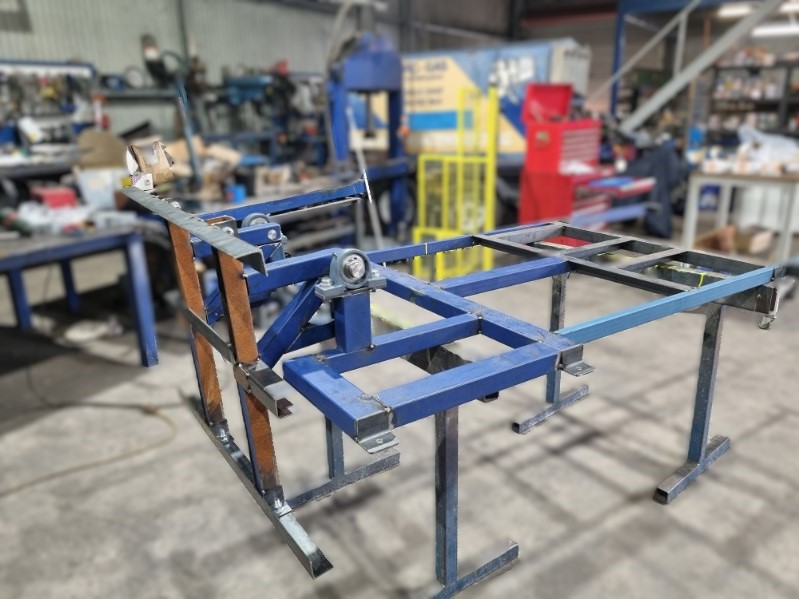
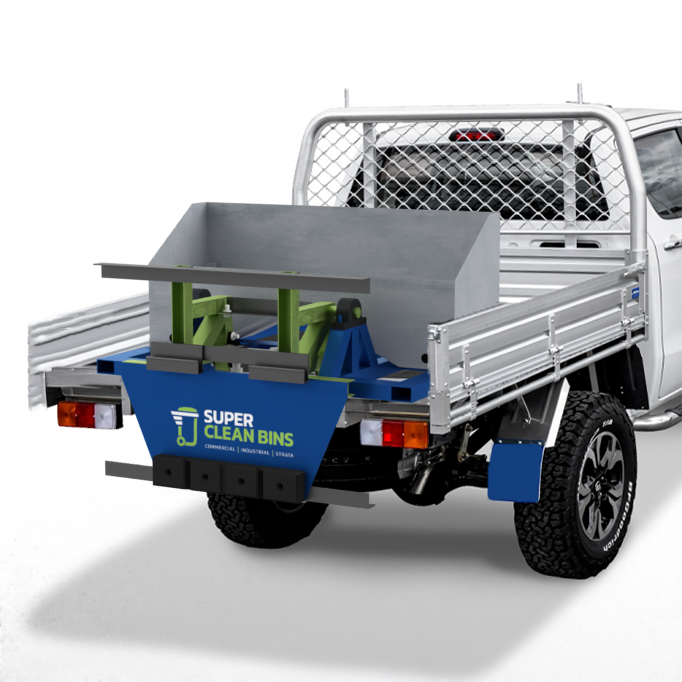
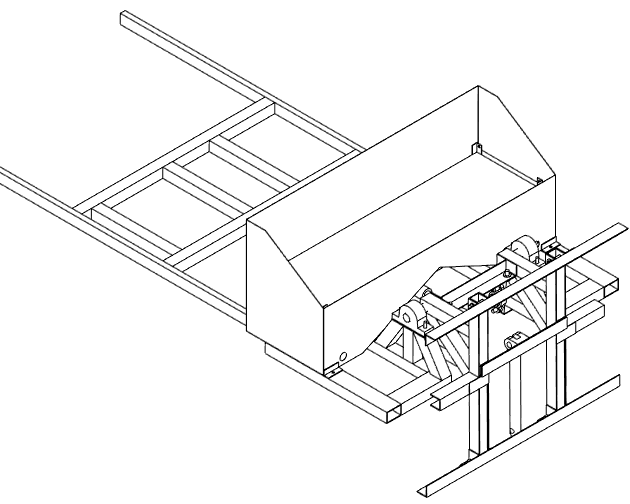
We began by developing a frame that could be fabricated locally from standard stock materials, supported by mechanical analysis to ensure it could safely withstand heavy loads. Because detailed specifications of the old unit were unavailable, we applied simulation design to eliminate risks of structural failure. We specified the bearings and hydraulic ram using hand calculations and computer simulations so that the unit would be able to lift even large commercial food waste bins filled with heavy solids. This required kinematic swept analysis to ensure the full range of motion needed for the design to succeed. Finally, we explored protective coatings resistant to acidic chemicals and produced concept renders to evaluate colour schemes aligned with branding and future product vision.
Results Discussion
The project delivered a stronger, more versatile bin cleaning system that eliminated weaknesses from the previous design. By optimising load capacity, improving durability, and incorporating protective finishes, we developed a product that was better suited for demanding environments. The design process also reduced risks through simulation and analysis, ensuring performance across all intended use. The final concept provided a ready-to-manufacture design with different branding options, allowing local manufacturers to acquire the design and intellectual property and begin production.
Our team partnered with a client who had over 15 years of experience using a wheelie bin lifting and cleaning system. The original unit had reached the end of its service life, and we were tasked with creating a new, improved design that solved the issues our client had encountered over time. The new system needed to build on the proven tipping and lifting mechanism but also incorporate an additional lifting function to handle smaller bins. The goal was to optimise functionality, durability, and manufacturability while addressing both residential and commercial waste management needs.
Methodology
We began by developing a frame that could be fabricated locally from standard stock materials, supported by mechanical analysis to ensure it could safely withstand heavy loads. Because detailed specifications of the old unit were unavailable, we applied simulation design to eliminate risks of structural failure. We specified the bearings and hydraulic ram using hand calculations and computer simulations so that the unit would be able to lift even large commercial food waste bins filled with heavy solids. This required kinematic swept analysis to ensure the full range of motion needed for the design to succeed. Finally, we explored protective coatings resistant to acidic chemicals and produced concept renders to evaluate colour schemes aligned with branding and future product vision.
Results Discussion
The project delivered a stronger, more versatile bin cleaning system that eliminated weaknesses from the previous design. By optimising load capacity, improving durability, and incorporating protective finishes, we developed a product that was better suited for demanding environments. The design process also reduced risks through simulation and analysis, ensuring performance across all intended use. The final concept provided a ready-to-manufacture design with different branding options, allowing local manufacturers to acquire the design and intellectual property and begin production.
Mechanical design and optimisation
Structural analysis and load simulation
Hydraulic system specification
Motion and kinematic analysis
Materials and coatings selection
Concept development and visualisation
Structural analysis and load simulation
Hydraulic system specification
Motion and kinematic analysis
Materials and coatings selection
Concept development and visualisation
"By combining practical experience with robust engineering, we created a durable, versatile solution for modern waste management."